OpinionDrafted with AI assistance and reviewed by our editors. Sources linked below.
6,000 lumens is the number that makes a projector a daytime TV. Here's who should care.
XGIMI's Horizon 30 series pairs triple-laser 4K/120Hz with brightness figures that used to belong to commercial units. The specs are real. The pricing takes some decoding.
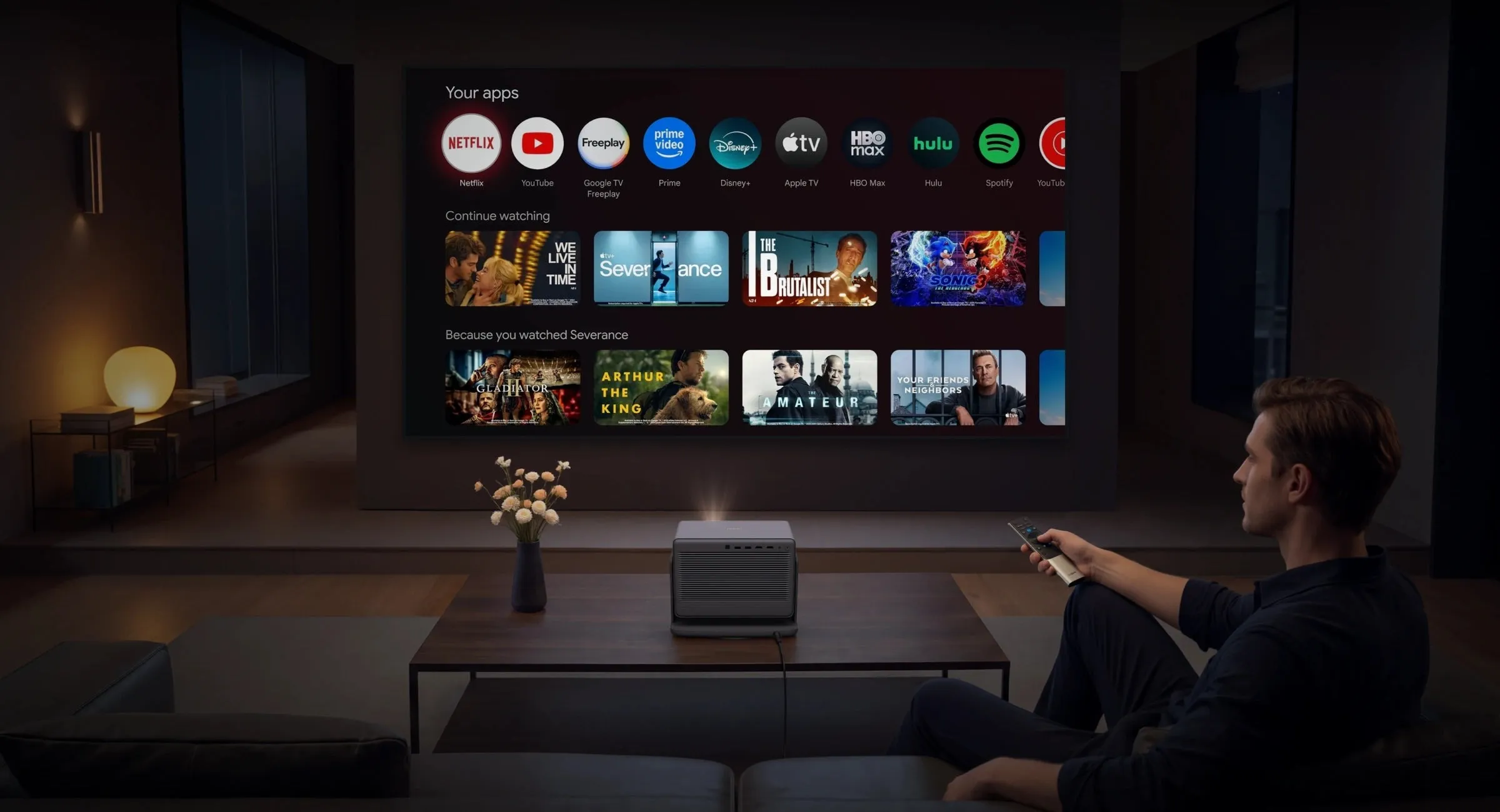
For most of their history, home projectors have come with an unspoken condition: close the curtains. The image was big and the room had to be dark. XGIMI’s Horizon 30 series, which Forbes’s John Archer covered at its October 12 unveiling, is interesting mainly because of one number that chips away at that condition: up to 6,000 ISO lumens.
The range comes in three versions. According to The Gadgeteer’s spec breakdown, the Horizon 30 Pro is rated at 4,800 lumens with up to 8,000:1 native contrast; the Max at 5,300 and 9,000:1; the Ultra Max at 6,000 and 10,000:1. All three use RGB triple-laser light, play 4K at 120 Hz, support VRR and FreeSync for gaming, and include optical zoom, lens shift and Google TV.
Why brightness is the spec that matters
Resolution has been solved; 4K is table stakes. Contrast is what makes a dark scene look like a dark scene. But brightness is what decides whether you can use the projector at all with the lights on, and 6,000 lumens is roughly double what consumer “living room” projectors managed a couple of years ago. At that level, a projector starts to behave like a very large television in a normally lit room — not in full sun, but on an ordinary evening without a ritual of blinds and dimmer switches.
That is a genuine change in who a projector is for. The customer isn’t the home-cinema enthusiast with a dedicated room; it’s the household that wants a 100-inch picture in the living room and doesn’t want to live in the dark.
The caveats, in order
First, the brightness figures are manufacturer numbers in high-power mode, which, as The Gadgeteer notes, can affect colour accuracy and fan noise. The picture mode you’ll actually watch will be dimmer. Still bright, but not 6,000.
Second, the pricing is confusing, and that’s on XGIMI. Introductory pre-order prices of $1,899, $2,499 and $2,999 ran through October 31; Forbes lists regular prices of $2,499, $2,999 and $3,499; and at least one outlet reports a further discount window in early November. Different outlets quote different numbers. If you’re buying, the only reliable price is the one on XGIMI’s own site on the day.
Third, 120 Hz at 4K is a gaming feature, and a welcome one, but input lag figures weren’t in the launch coverage. Gamers should wait for measured reviews.
Who should care
If you’ve wanted a projector and ruled it out because your living room has windows, this is the generation to look at again, and the Pro at the introductory price is the one to start with. If you already own a good 4K projector in a darkened room, more lumens won’t improve your Friday night. And if you’re deciding between a large TV and this, the honest answer is that a TV still wins in daylight; the projector wins on size per dollar once the sun goes down. The Horizon 30 narrows that gap further than anything we’ve seen at consumer prices. It doesn’t close it.
Before you decide
What are the three Horizon 30 models?
Horizon 30 Pro (4,800 ISO lumens, up to 8,000:1 native contrast), Horizon 30 Max (5,300 lumens, 9,000:1) and Horizon 30 Ultra Max (6,000 lumens, 10,000:1). All three share RGB triple-laser light, 4K at 120 Hz, a dual-iris system, optical zoom, lens shift and Google TV, per The Gadgeteer's spec breakdown.
How much do they cost?
Introductory pre-order prices of $1,899, $2,499 and $2,999 ran from October 12 to 31, with open sales from November 1. Forbes lists the regular prices as $2,499, $2,999 and $3,499. Some outlets report a second discount window in early November, so check XGIMI's site for current pricing.
Are the brightness figures realistic?
They are manufacturer figures measured in high-power mode, which can affect colour accuracy and fan noise. Expect somewhat less in the picture modes most people actually use.