OpinionDrafted with AI assistance and reviewed by our editors. Sources linked below.
The $180 Fitbit Edge's best feature isn't the AI coach. It's the battery you can replace.
Google's new tracker launched with a week-long, swappable battery — a first for Fitbit — plus ECG, skin temperature and better GPS. Reviewers like it. The subscription upsell is the part to read twice.
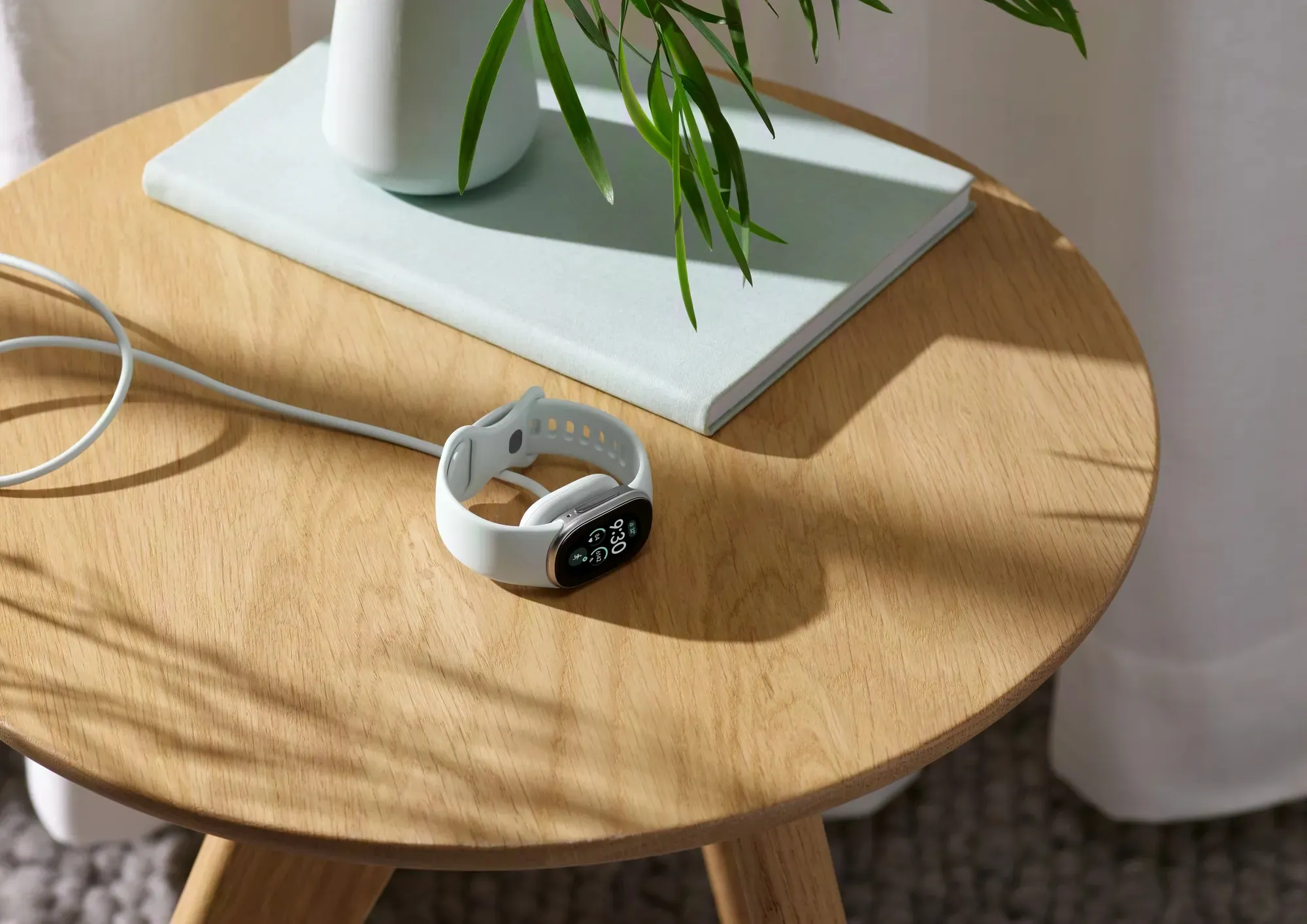
Google’s Fitbit Edge went on general sale on October 27 at $179.99, replacing the Charge 6 as the company’s main fitness band. Bloomberg’s review, published the day before, describes a device that sits “somewhere between a full-fledged smartwatch and a smaller, purpose-built fitness tracker” — a screened band with an ECG sensor, a skin-temperature sensor, an updated GPS chipset that Google says is 40% more accurate outdoors, and three months of Google Health Premium in the box.
The launch messaging leans on the AI coach that Premium unlocks. We’d lean on something else.
The battery is the headline
Bloomberg’s launch report notes the Edge has a replaceable battery, a first for Fitbit, rated to last about a week and able to take on a day’s charge in five minutes. That is the most consequential line in the coverage, because the way fitness trackers die is almost always the battery. Two or three years in, a band that once lasted a week needs charging every other day, and since the battery is sealed in, the device goes in a drawer.
A swappable battery changes the economics of the thing. It turns a two-year gadget into one you could plausibly keep for five, and it quietly addresses the e-waste problem the category has never wanted to talk about. We’d like every tracker to copy this.
One caveat the reviews supply: with the always-on display enabled, several testers saw two to three days rather than a week. Treat “a week” as a best case with the screen set to wake on raise.
The sensors are good; the payments are gone
ECG and skin temperature on a $180 band are generous, and they’re the sensors that matter for the health features people say they want — heart rhythm notifications, illness and cycle tracking. GPS accuracy is the thing runners will notice first, and a 40% improvement claim is worth testing against a known route.
What’s missing is NFC: there are no contactless payments. If you tap your wrist at the coffee counter, that’s a step backwards from some rivals, and a strange omission on a device pitched as “smartwatch-like.”
Read the subscription line twice
Most of the Fitbit app remains free, which is good and not guaranteed in this market. Google Health Premium is $10 a month or $100 a year, and the device’s marquee feature — the conversational AI coach — lives behind it. Three free months is a trial, and trials are designed to be forgotten. Decide before month four whether the coach is something you use, or whether the free data was all you needed. For most people we suspect it’s the latter.
Our verdict
Reviewers are broadly positive, and so are we, with the emphasis in a different place. The Edge is worth $180 for the replaceable battery and the sensor set; the AI coach is a nice-to-have you’ll pay for annually if you let it. Buy it for the hardware, keep the subscription decision for yourself.
Before you decide
How much is the Fitbit Edge and when is it available?
$179.99. Pre-orders opened October 12 and general availability began October 27, per Bloomberg and Google. It replaces the Fitbit Charge 6.
What's new?
A replaceable battery rated for about a week, which Bloomberg notes is a first for Fitbit, with a five-minute charge giving roughly a day; an ECG sensor, a PPG sensor and a skin-temperature sensor; and an updated GPS chipset Google says is 40% more accurate outdoors. It works with iOS and Android. There's no NFC for payments.
Do I need a subscription?
Most of the core app is free. Google Health Premium costs $10 a month or $100 a year and adds a conversational AI coach; three months are included.